-
print gallery tokyo from 2012,
design and curation
—
Organized by Hiro Abe,
( -_ - )
graphic designer and lecturer at
Joshibi Art Univ, Tama Art Univ,
Kuwasawa Design School
- 023 / moiré motion emotion
Takahiro Kurashima - 022 / Incunabula
David Maurissen/vlek - 021/ My Father’s War
Nigel Oxley - 020 /
Swiss Books and printed matter
selected by Gilles Gavillet - 019 /
From Typography to Grammatography
Underware - 018 /
Everyday, Graphics, and Calendar
ORDINARY PEOPLE
- 017 / Running Boy
Tomáš Kocka, Alex Selmeci -
016 /
honoring the memory of
helmut schmid
-
015 /
It is bitter to leave your home
Romano Hänni -
014 / Kurt Hauert:
Special Exhibition
-
013 / Stray Birds
Lee Kyeongsoo
-
012 / ttt(talk technology type)
Chi-Binh Trieu and
Chi-Long Trieu
-
011 /BWTT
Bernd Kuchenbeiser -
010 / Works. Mainly printed.
Marianne Dages -
009 / Color Code
Jasio Stefanski -
008 / Day with Romano Hänni
One day exhibit/lecture -
007 / danke Emil Ruder
Special Exhibition
-
006 / Typo Picture Book
Romano Hänni -
005 / BRÖTZM
Peter Brötzmann -
004/ / bookshop
SUNNY BOY BOOKS
Readin’good -
003 / Letterpress workshop
First Universal Press
内外文字印刷 -
002 / Typographic Notes II
Romano Hänni -
001 / politypographien
Helmut Schmid
-
Handprinted Books 1985–2008
Romano Hänni
(before print gallery)
- 090 8779 4743
official [at]
printgallerytokyo.com
- 15:30-20:00 mon, fri
13:30-20:00 sat, sun
Please contact us except
during the exhibition period
-
企画展会期以外は
ご連絡下さい

- pp main
- pp2 / kawalabo [6th]
Hiromi Toyokawa, So Imaizumi - pp1 / kawalabo [5th]
Natsuki Tawatari, Chiaki Miyakawa
Paulo de Cantos 8+1=1
A Designer of Pedagogical Theories
print gallery Exhibition
2025 4.12 Saturday to 5.19 Monday
Admission Free
😀 Open Days: Fridays, Saturdays, Sundays, and
the following Mondays (April 21, May 5, May 19)
😀 Spacial Open Days No.1:
April 29 Tuesday/National holiday
🥲 Closed Days: Tuesdays, Wednesdays, Thursdays, and
the following Mondays (April 14, April 28, May 12)
Reception:
2025.4.12 Saturday, around 18:00 to 20:00
パウロ・デ・カントス:8+1=1
教育学理論のデザイナー
プリントギャラリー展示
2025年4月12日(土) から 5月19日(月)まで
13:30 – 20:00
😀 開いています:金・土・日と
下記の月曜 (4月21日、 5月5日、 5月19日)
😀 特別オープン日 No.1:
4月29日火曜/祝日
🥲 閉まっています:火・水・木と
下記の月曜(4月14日、4月28日、5月12日)
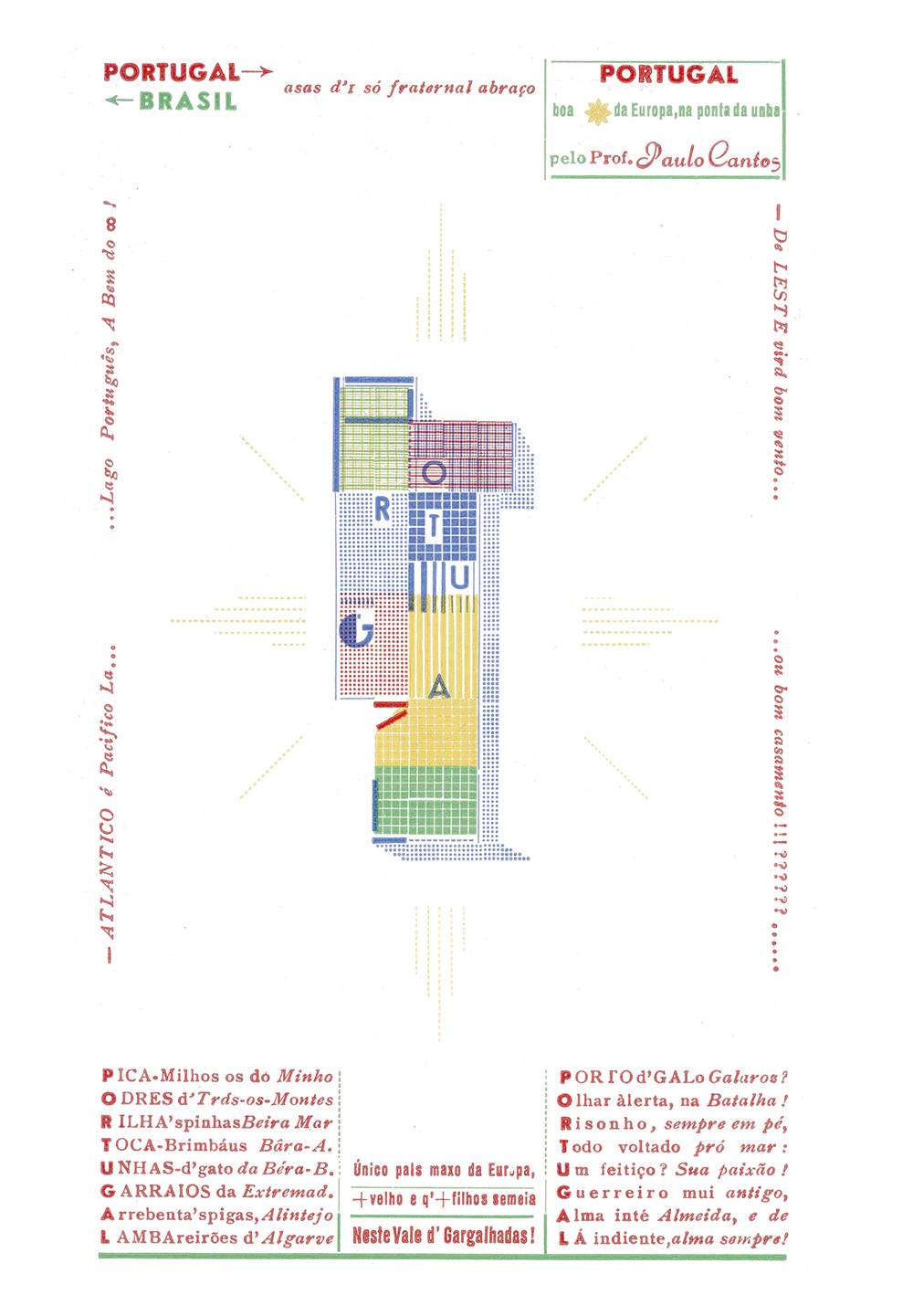
Paulo de Cantos was a Portuguese educator and amateur typographer who immersed himself in the educational reform movements of the early 20th century.
Between the 1920s and 1960s, he published a wide range of textbooks designed to support learning. His books combined structural experimentation with rich visual design: diagrams, typography, and especially the tactile possibilities of letterpress composition. He also intervened in the structure of language itself, proposing new systems of notation such as “PAK” and an alternative writing system for Portuguese. His educational approach blended rationalism with folklore, science with speculative thought, and visual form with linguistic innovation.
Even without understanding Portuguese, one is struck by his dense layouts and illustrations—peculiar, humorous, and full of enigmatic charm.
Despite his ingenuity, Cantos’s ideas were largely marginalized under Portugal’s fascist regime, distancing him from official educational circles.
This exhibition traces his thinking and visual world, drawing on the long-standing research and collection efforts of design studio Barbara says…
We will have a small selection of items for sale: “A Cantos Compendium” (edit and design by António Silveira Gomes and Cláudia Castelo, published by Barbara says...), a petit leporello edition “The Curious Faces Created by Professor Paulo de Cantos on their Grand Journey around the world” (concept and designed by Hiro Abe and Ryota Kajiwara, published by Print Gallery) inspired by unique faces created by Cantos and “Cantos 8+1=1”patch
プリントギャラリーでは2025年4月12日より〈パウロ・デ・カントス:8+1=1 教育学理論のデザイナー〉を開催します。
パウロ・デ・カントス(Paulo de Cantos 1892–1979)は、ポルトガルの教育者・アマチュアのタイポグラファで、20世紀初頭の教育改革運動の只中に身を投じ、1920年から1960年にかけて、学習支援のための教科書を多数、独自に出版しました。本の構造に工夫を凝らし、言語・音声・視覚が交錯するタイポグラフィと図解、折句などの言葉遊びを駆使し、合理主義と民俗性、科学と思考、そして言語に対する実験的な姿勢─独自の表記体系PAKやポルトガル語の速記文字の提案など、造形と並行して言語の構造にも介入していきました。
ただ、そうした経緯はともかくとして、一見して濃厚なレイアウトや、何かくすりとしてしまうような独特で奇妙な造形には、今なお謎めく解せない魅力…があります。
一方、カントスの思考や行動、造形の革新性はポルトガルのファシズム体制下ではあまり受け入れられず、正規の教育制度からは距離を置かれ、忘れられた存在となっていきました。本展では、リスボンのデザインスタジオ「Barbara says...」が収集・調査してきたこともあり、近年再評価が進むカントスの思考と造形をたどります。
カントスの作品集「A Cantos Compendium」(編集・デザインはAntónio Silveira Gomes, Cláudia Castelo /発行はBarbara says...)、本展に際し制作された蛇腹折の豆本「パウロ・デ・カントス先生のびっくりフェイスと諸国漫遊学」(制作とデザインは阿部宏史と梶原良太/発行はプリントギャラリー)、「カントス 8+1=1」謹製ワッペン、解説冊子(未完/制作とデザインは阿部宏史と飯村大樹)を販売。
On the exhibition “Paulo de Cantos 8+1=1” in Tokyo
Barbara says...(António Silveira Gomes, Cláudia Castelo)
Paulo [de] Cantos [Paulo Diː ˈKæntəʊz ] (Lisbon, b. March 13,1892 - Lisbon †April 10, 1979) was a Portuguese high school principal, author of auxiliary educational books and avid book collector prominent as rector of a Public School located in a bustling coastal town of Póvoa de Varzim.
Influenced by progressive pedagogy movements of the early 20th century, he began self-publishing an array of auxiliary schoolbooks where he experimented, with different levels of mastery, educational methods through technical drawing diagrams, visual information, typography and book arts. Taking advantage of his closed school network where he would test his ideas in the classroom by day and print his outcomes by night.
Cantos is the protagonist of an "Other History" of Graphic Design that is not aligned with the dominant core of both local and western narratives. His style can be characterised by Portuguese Modernism, employing everyday language combined with an informed scientific discourse. Driven by a growing bibliography and an effusive imagination, combining rationalist ideas through a satirical vernacular style.
His ideas were not taken up very well with the Ministry of Education and the local community, at the time dominated by the Portuguese “New State” fascist regime. The unusual typographic and pedagogical language, composed a transgression(that was mildly tolerated) at a promising but troubled time
for contemporary pedagogical movements and ultimately rendering his image as eccentric. Evidently, however, his heuristic methods seemed effective, as seen in a few surviving documents from students who kept his books and resulting exercises.
Interest in this micro-universe arose long after his death, at a time when practitioners, teachers and students of graphic design were debating issues of the institution alisation and heritage of Portuguese design, given the growth of this professional area in Portugal. After the euphoria of rediscovery and monographic reconstruction, in this exhibition we revisit Cantos’ biobibliography, looking for processes through which he designed his books, and to reflect upon what influenced his creation of Portuguese identity. Reflecting upon the ongoing research regarding this author to cogitate on the effects of the Portuguese dictatorial regime that reigned the country until 1974.
東京での「パウロ・デ・カントス 8+1=1」展に寄せて
Barbara says...(アントニオ・シルヴェイラ・ゴメス、クラウディア・カステロ)
パウル・デ・カントス Paulo de Cantosは、1892年3月13日にポルトガルのリスボンに生まれ、1979年4月10日に同じくリスボンにて死去した。教育者であり、学習補助のための教育書を数多く手がけた著者であり、熱心な書籍愛好家でもあった。リスボン近郊の海沿いの避暑地ポヴォア・デ・ヴァルジン Póvoa de Varzim にある公立学校の学長としても知られている。
20世紀初頭の進歩的な教育改革運動に影響を受け、カントスは学習を支援する補助教材としての教育書の自主出版を開始した。それらの書籍の中では、学生の習熟度に応じて、技術的な図解(ダイアグラム)や視覚的な情報、タイポグラフィ、本のデザインを通じた教育の実験を試みた。彼は、自身が校長を務め管理する学校という閉じたネットワークを活用し、日中は教室で教育の実験をおこない、夜になるとその成果を印刷するという生活を続けていた。
カントスはポルトガルや西洋の主流のグラフィックデザイン史には登場しない「もう一つの歴史」の主人公である。そのスタイルはポルトガル・モダニズムの枠組みの中にありながら、日常的な表現や言葉を科学的な視点と組み合わせ、膨大な読書量と豊かな想像力をもとに合理主義的なアイデアを風刺的且つ民族色のある形で融合させていた。
しかし、1933年から1974年にかけて、ポルトガルはアントニオ・サラザールを中心とする「新国家(エスタド・ノヴォ Estado Novo)」と呼ばれるファシスト政権下にあり、カントスのアイデアや作品は当時のポルトガルの教育省や地域社会からあまり受け入れられなかった。その型破りなタイポグラフィや教育の手法は、既存の秩序に対する一種の軽やかな反抗であり、教育改革運動が希望に満ちていながらも困難を伴う時代背景を反映していた。このため、彼は一風変わった存在と見なされるようになった。それでも、彼の試行錯誤的な方法論は実際に効果的だったようで、生徒たちが保管していたカントスの著した書籍や課題の一部が現存し、その効果を確認することができた。
カントスがつくりあげた小宇宙への関心は、その死(1979年)の後、しばらく経ってから高まりだした。ポルトガルでグラフィックデザインという専門分野が発展するにつれて、デザインの制度化と過去の遺産の継承に関する議論がおこなわれる中で、カントスの活動が再評価されたのである。
この展覧会「パウロ・デ・カントス 8+1=1」では、書誌的・伝記的な視点から、彼の書籍デザインを探り、またポルトガルでの近代国家のアイデンティティの形成に影響を与えた点を考察する。また、カントスに関する研究を通じて、1974年まで続いたポルトガルの独裁政権が彼の作品や教育思想に与えた影響についても考える機会ともなるだろう。(訳:阿部宏史)